

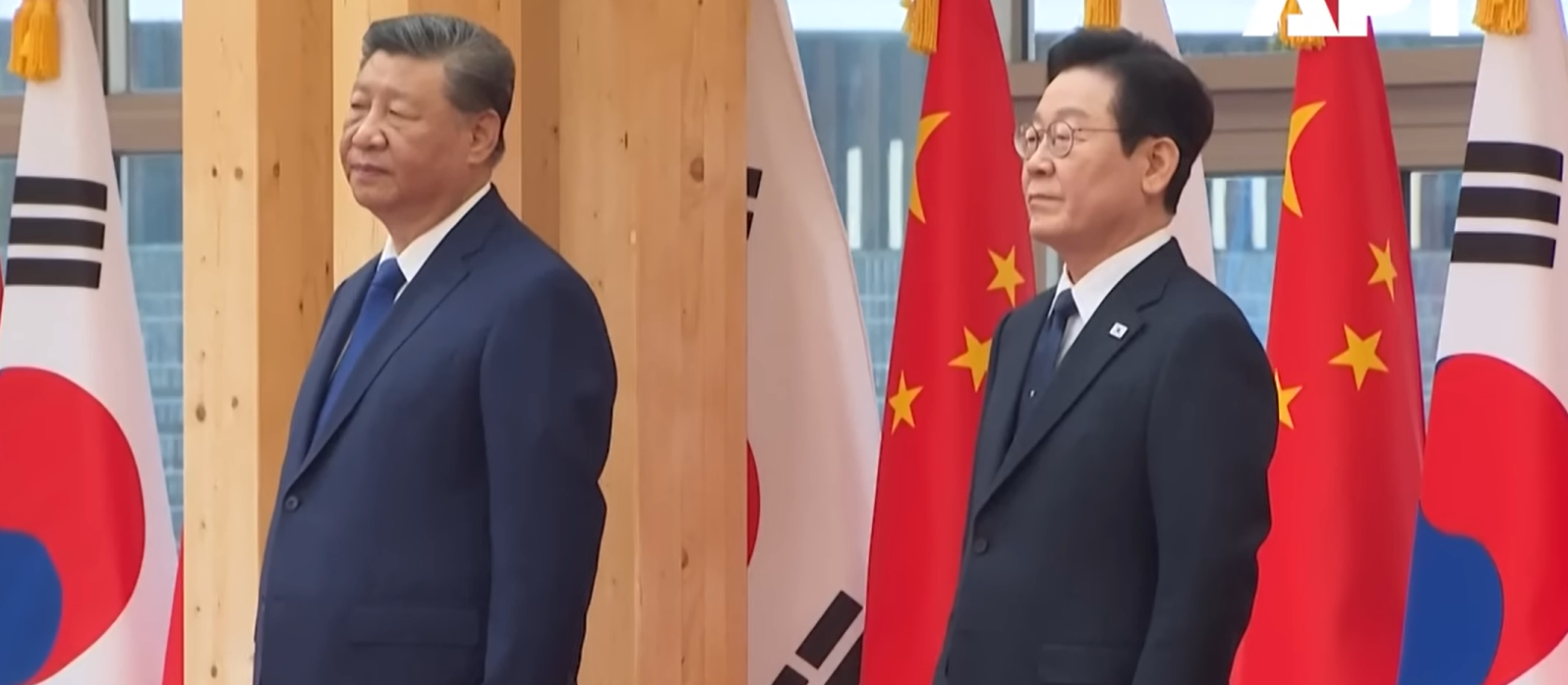
South Korean President Lee Jae Myung has used his four‑day visit to China to call for a new chapter in bilateral relations, urging both countries to strengthen cooperation in security, technology and economic development. The trip marks the first visit by a South Korean leader to Beijing in several years and comes at a time of shifting regional dynamics and rising geopolitical tension.
During talks with Chinese President Xi Jinping, Lee emphasized the need to restore trust and rebuild momentum in a relationship that has faced political strain and economic stagnation. He described the visit as a “crucial opportunity” to stabilize ties and reaffirm cooperation on regional issues, including the Indo‑Pacific security environment and other sensitive activities.
At a separate meeting with business leaders, Lee highlighted the urgency of revitalizing Korea‑China trade, which has hovered around the $300 billion mark after peaking in 2022. He argued that both countries must “open a new route” for economic collaboration by combining advanced technologies such as artificial intelligence with traditional industries like consumer goods, cultural content, and manufacturing. This approach, he said, could create new growth engines for both economies.
Lee also warned that global supply chains are becoming increasingly unpredictable, urging Seoul and Beijing to adapt quickly rather than rely on past momentum. He noted that both nations have benefited from tightly linked industrial networks but now face a rapidly changing technological landscape.
Xi, meanwhile, stressed the importance of maintaining stability in Northeast Asia and encouraged Seoul to make strategic decisions that support long‑term peace. The two leaders agreed to continue dialogue on maritime concerns and regional security, while also exploring new areas of cooperation.
Lee’s visit includes stops in Beijing and Shanghai, as well as upcoming diplomatic engagements with Japan, reflecting Seoul’s effort to balance relations among its key regional partners while navigating complex geopolitical pressures.
Source: The Korea Herald | Ministry of Foreign Affairs of the People’s Republic of China | BBC